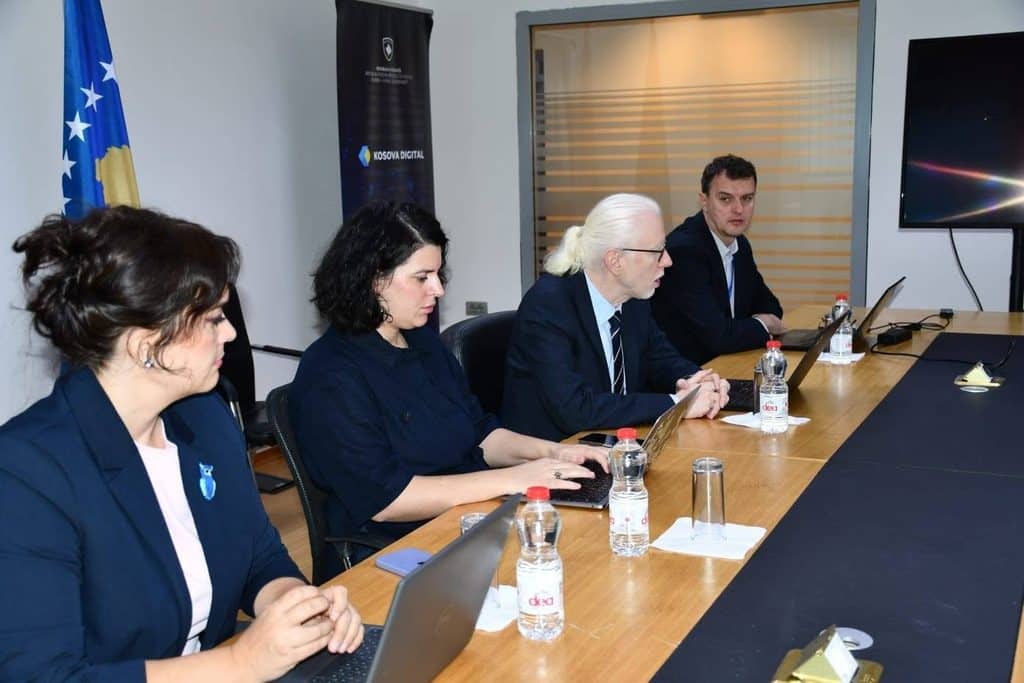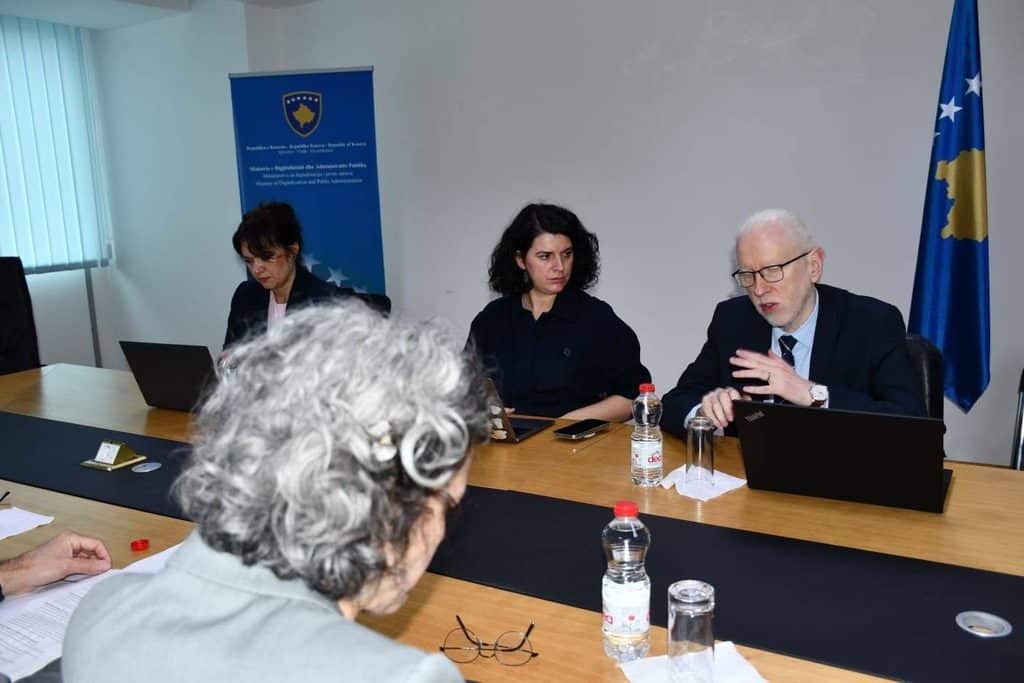
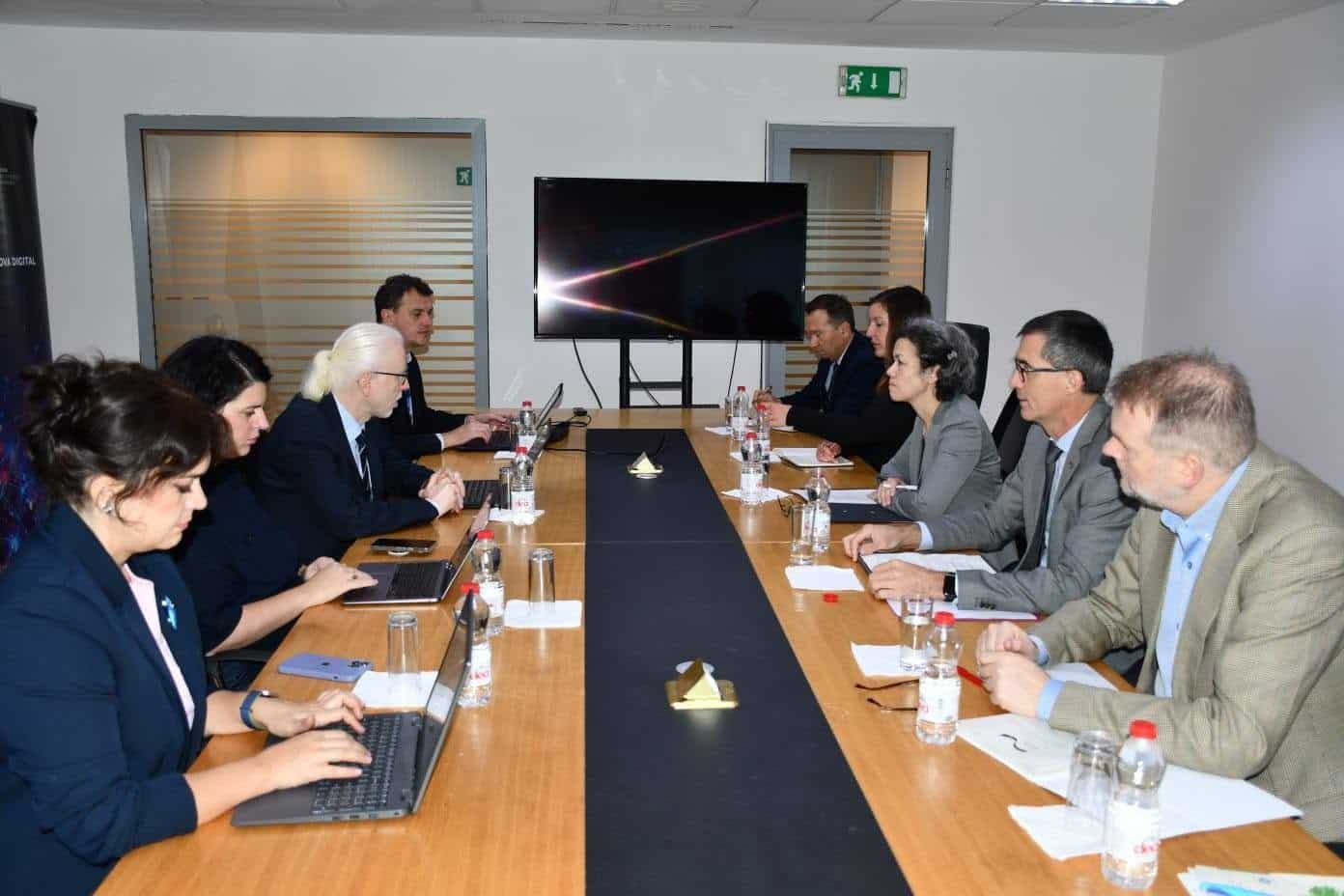
Today, as part of the intergovernmental consultations between Kosovo and Germany on development cooperation, the Minister of Digitalization and Public Administration met with representatives from the German Federal Ministry for Economic Cooperation and Development (BMZ), the German Embassy, and GIZ. The discussion focused on Kosovo’s progress and priorities regarding the reduction of administrative burdens and the digital transformation of public administration.
The German government—through a project co-financed by the European Union and implemented by GIZ—has been a key supporter of the program aimed at reducing administrative burdens. Within the framework of this cooperation, in addition to the digitalization of numerous administrative services, new digital systems have been developed to manage licensing processes for liberal professions, surveyors, driving schools, architects, engineers, and healthcare professionals.
Furthermore, systems have been developed for the recognition of academic diplomas, employment services, and case management, while the first artificial intelligence-based digital assistant is currently being tested within the Tax Administration of Kosovo. Beyond digitalization, the program has contributed to the simplification of over 730 administrative services at both the central and local levels. It has also supported the implementation of one of the most significant reforms in public service delivery: the integration of services around key life events for citizens, starting with a pilot project for services related to the birth of a child.
The meeting also addressed the remaining steps for integrating the developed systems with the eKosova platform, as well as the potential for continued support from the German Government in the coming years. The objective is to ensure that digital systems do not operate in isolation, but rather function as part of an integrated and sustainable digital governance architecture—enabling end-to-end digital processes and simpler, more efficient services for citizens and businesses.
In this context, the Minister also outlined broader priorities for digital transformation, including the launch of a national electronic identification (eID) platform. This platform will facilitate robust electronic authentication, electronic signatures and seals, as well as a digital wallet—all of which are key components for advancing toward fully digital public services.
In closing, the Minister thanked the German Government and GIZ for their ongoing support and concrete contribution to the implementation of these reforms, emphasizing the importance of cooperation for the modernization of public administration, the strengthening of institutional capacities, and the advancement of digital transformation in Kosovo.